
Learns as you go
Rackoon reads what you actually did, not just what was planned, and the next workout follows.
What it adapts to
Every workout is built for you, and the next one learns from the last.
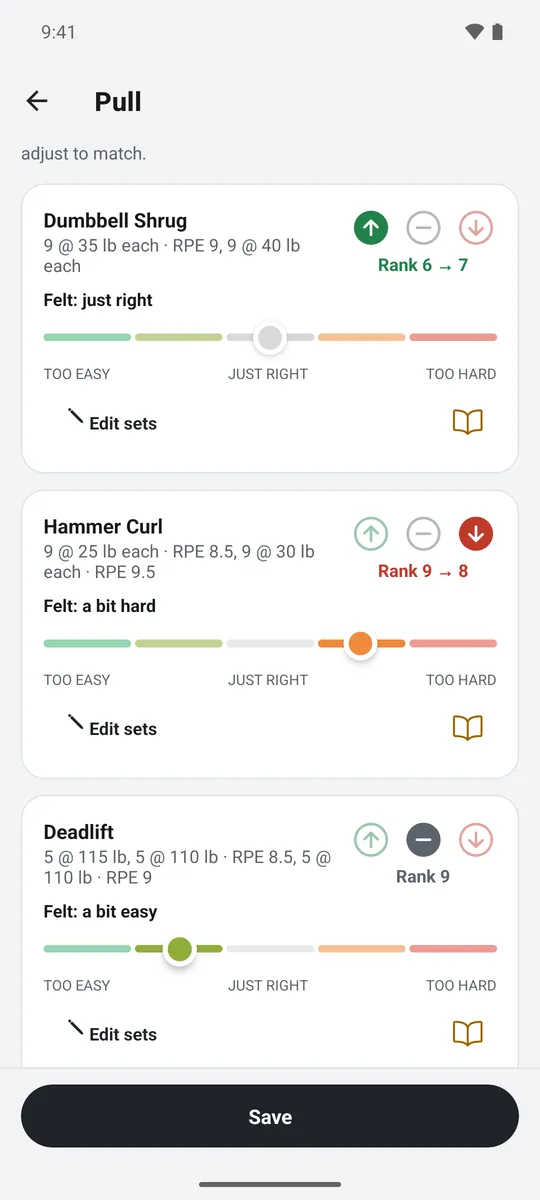
- How it felt: too easy or too hard on each exercise changes its next weight and reps.
- What you really lift: the reps and weights you actually do, not just the plan, set up your next sets, and new PRs are noticed and kept.
- What you like: votes up or down change how often an exercise is picked, and “Not for me” takes one out of your workouts.
- Your gym and your time: only exercises for the equipment you have, at your experience level, in a workout sized to the time you’ve got.
- Your body: injuries and sore spots you add steer exercises away from them until you say they’re better.
- Time off: after a few weeks away from a body part, your first workout back starts lighter, and the next ones climb back.
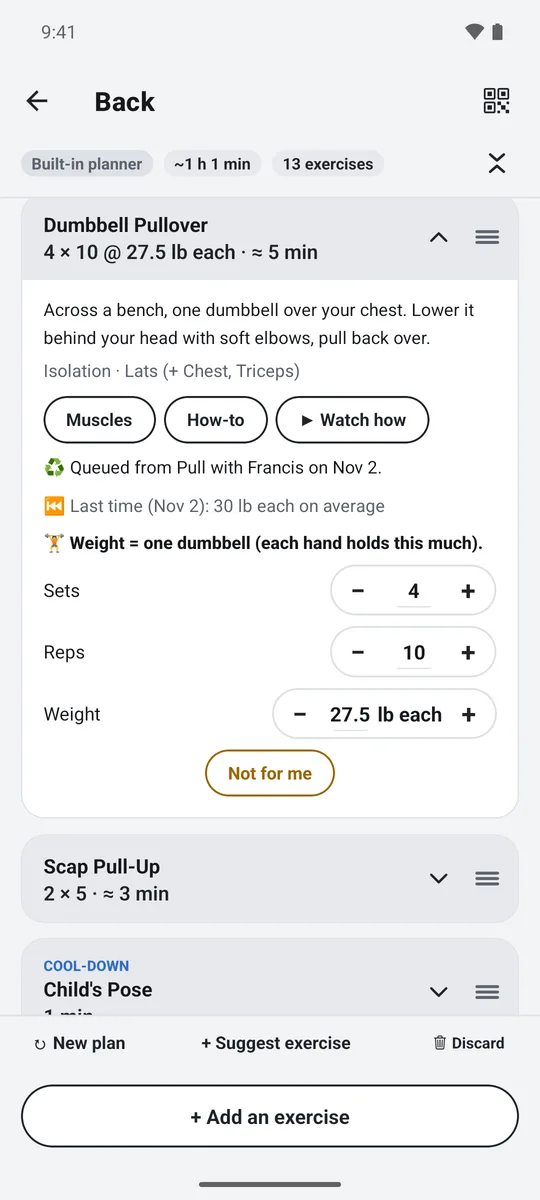
- Real life: missed workouts move to your next gym day, vacations pause the plan, unfinished exercises come back in the next workout for the same muscles, and rest days never break your streak.
How it felt
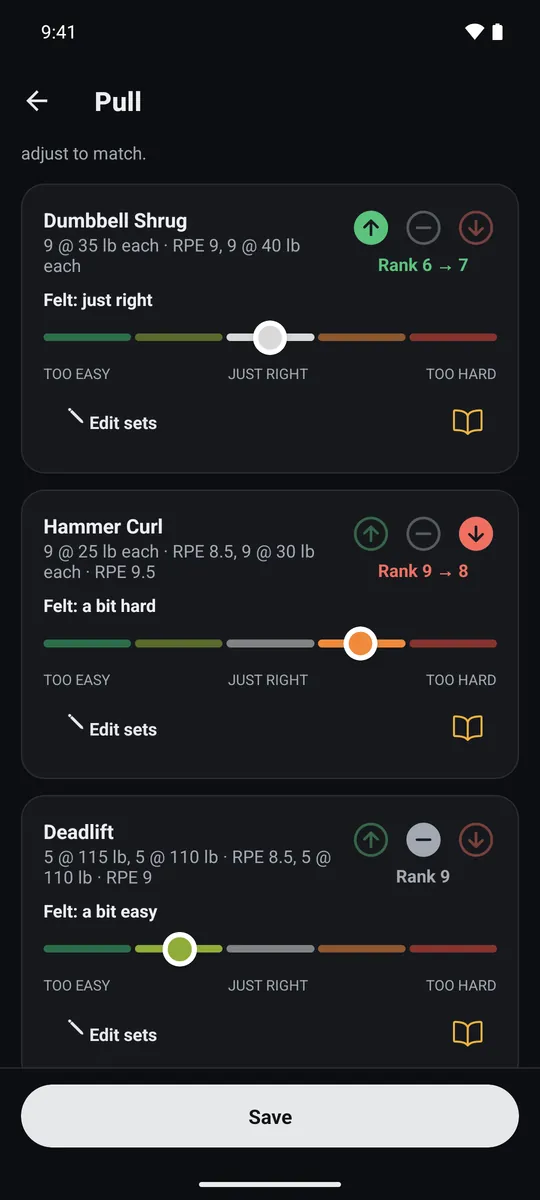
After a workout, rate each exercise. Too easy raises the weight or the reps next time; too hard lowers them. Votes up or down change how often an exercise gets picked.
Next time’s numbers
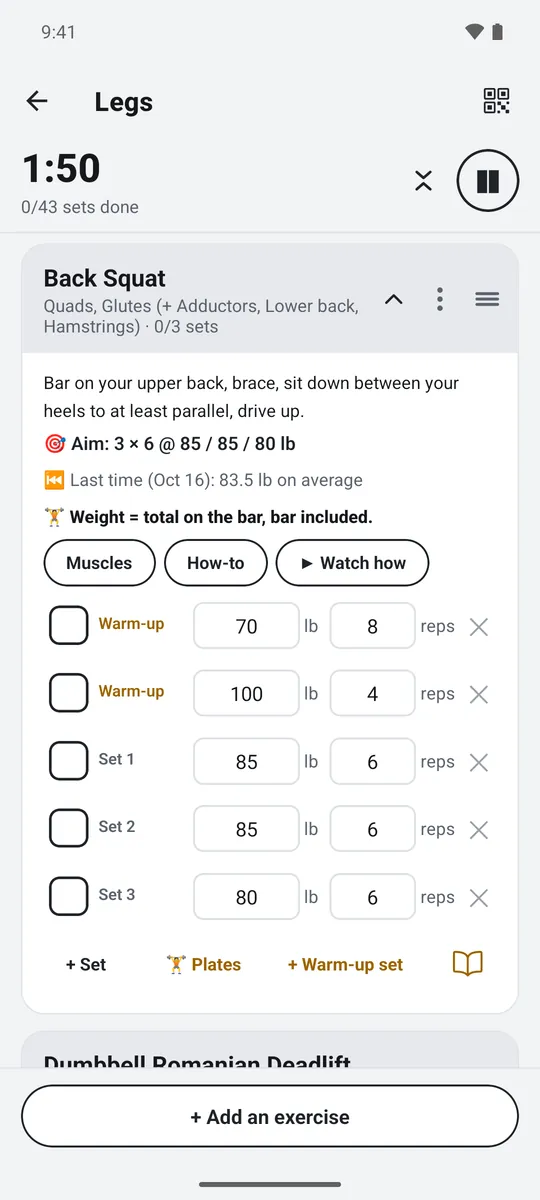
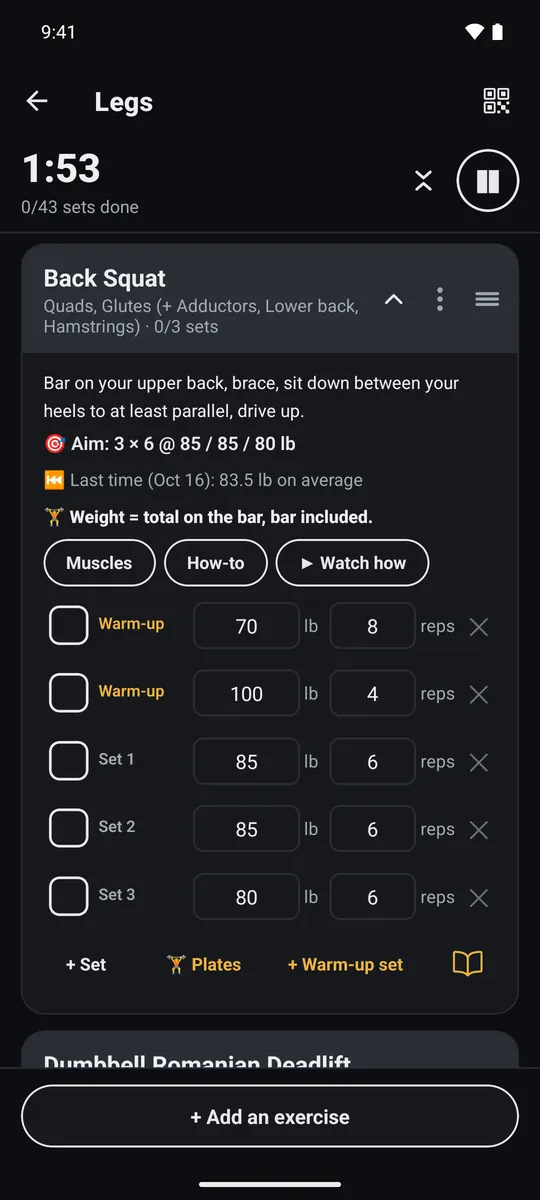
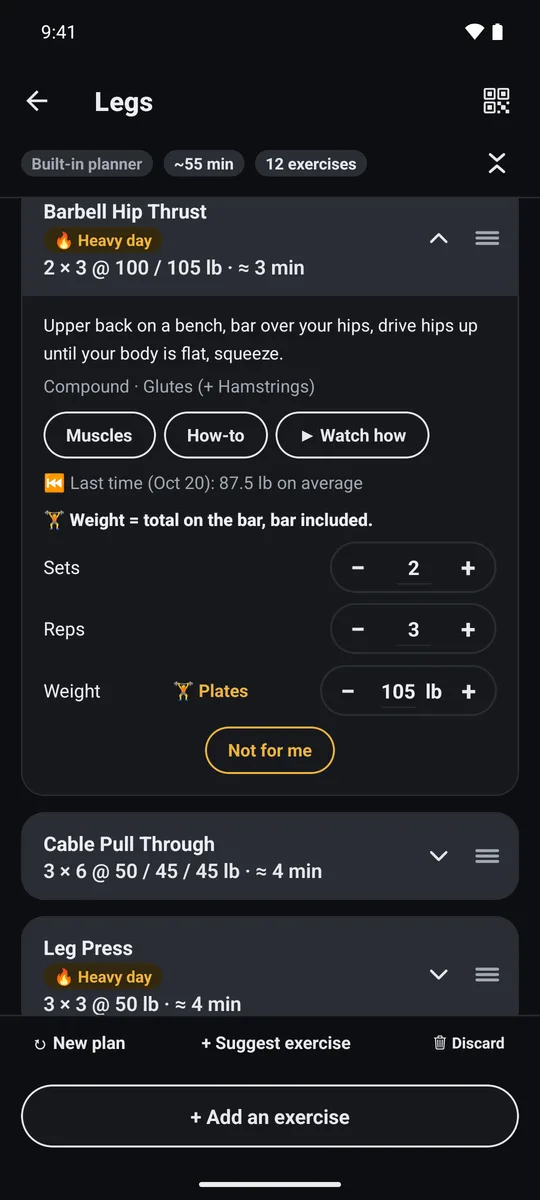
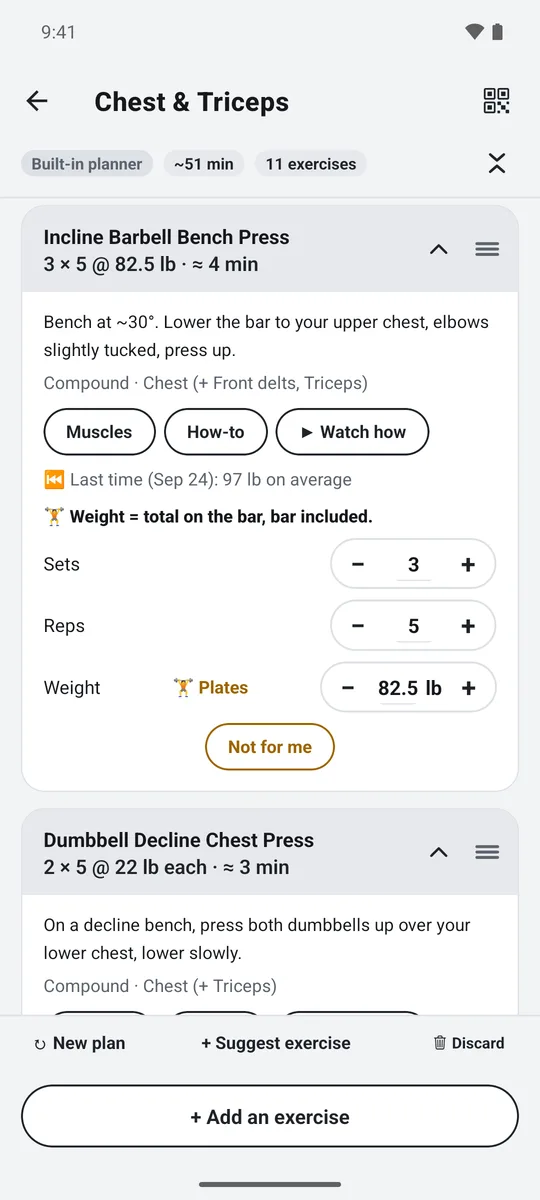
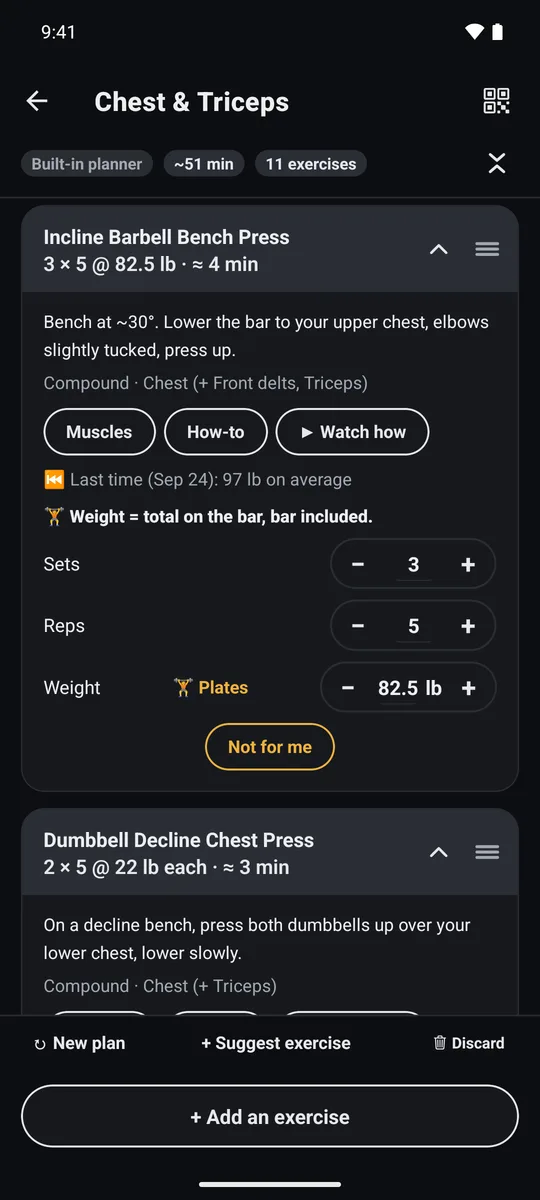
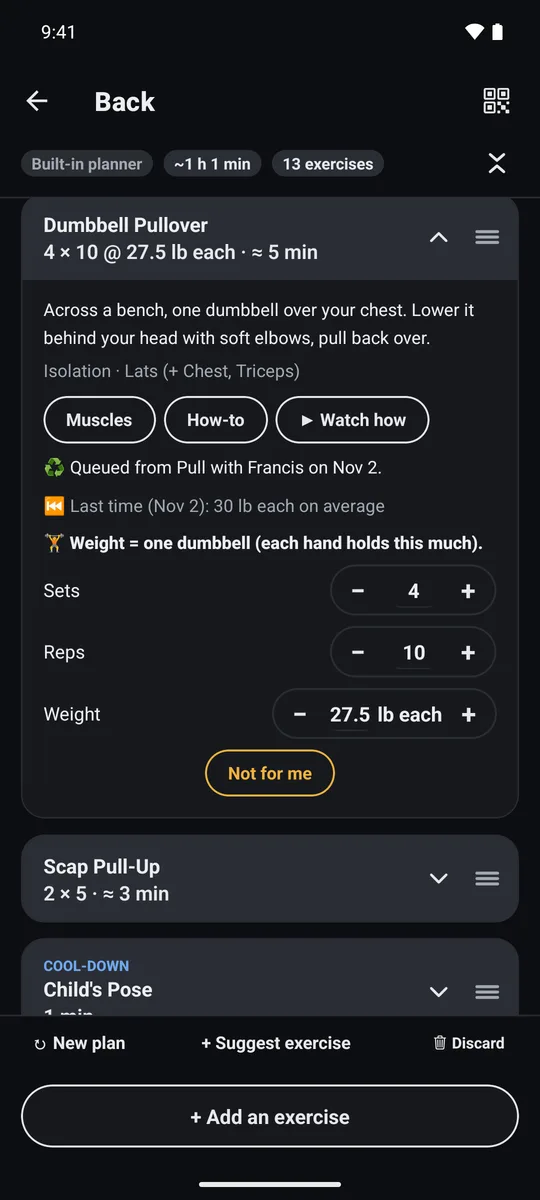
Each card shows your aim and last time’s sets, so you know where you stand before the first rep.
Variation days
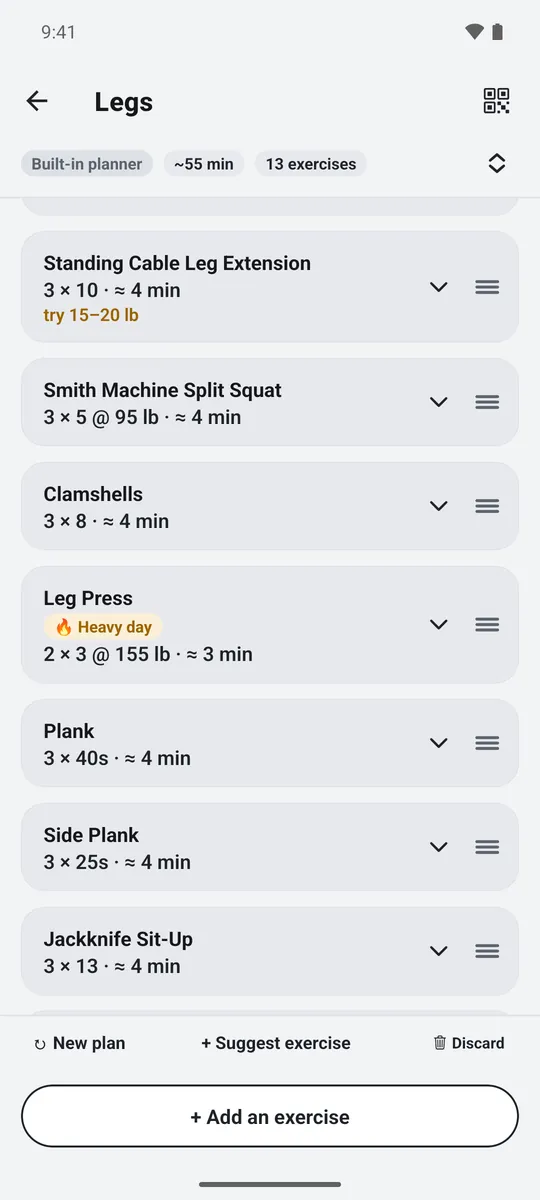
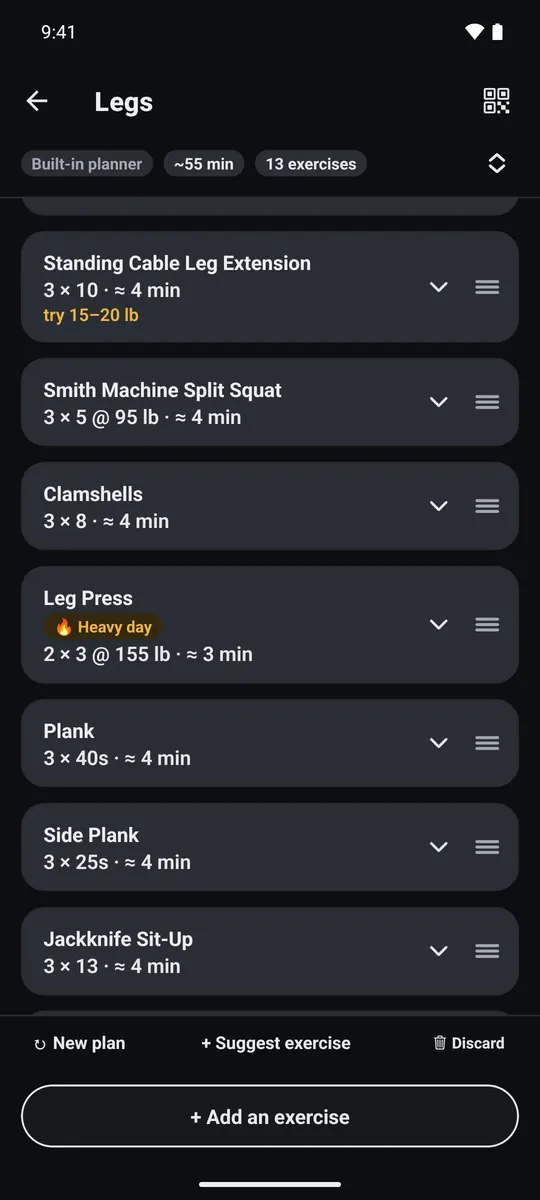
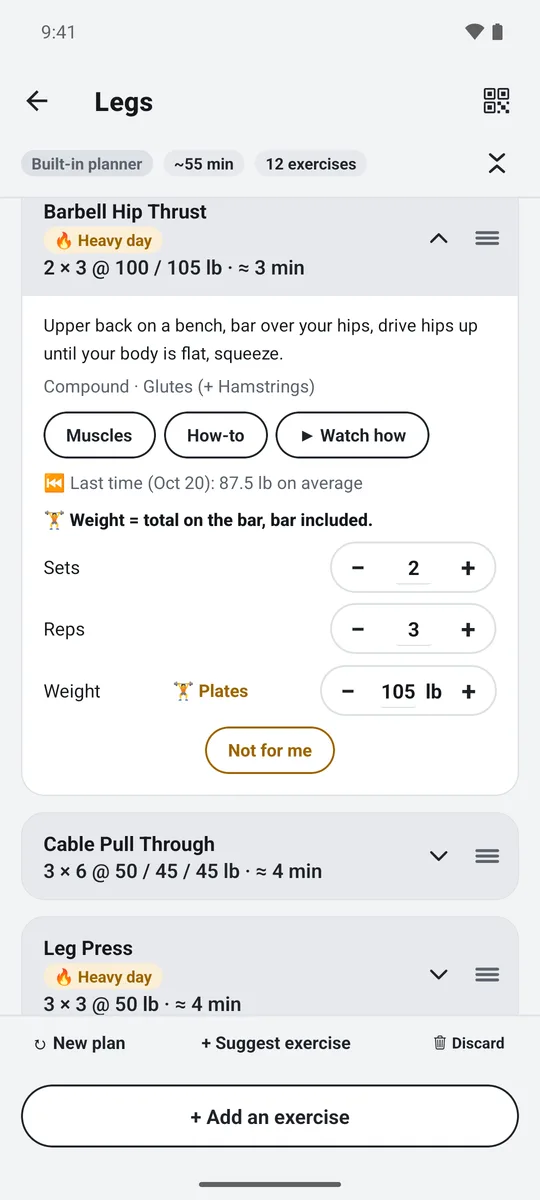
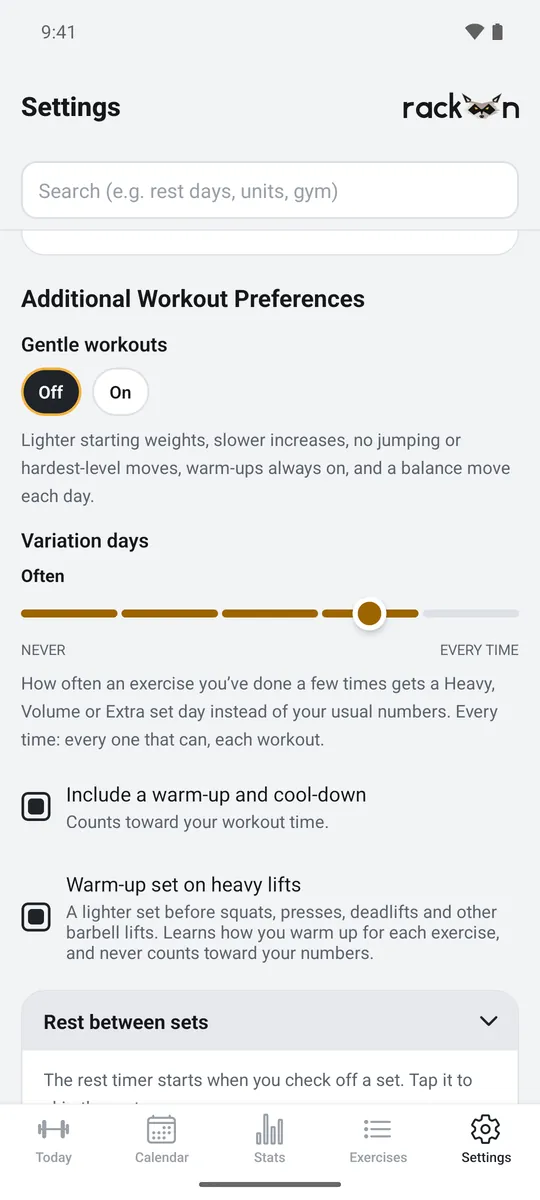
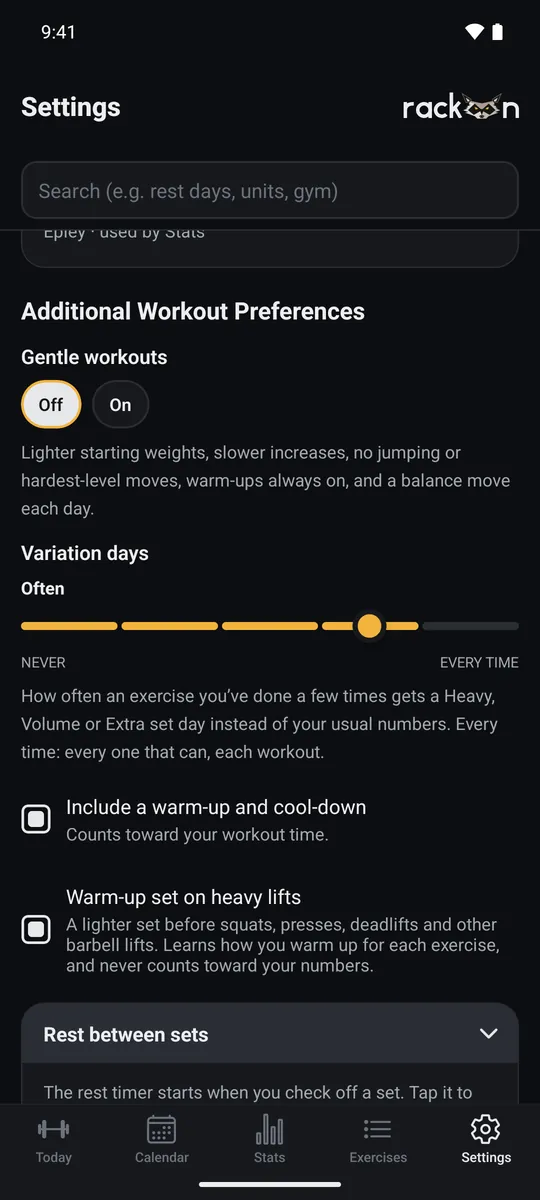
Some workouts give an exercise a twist: a 🔥 Heavy day (heavier, fewer reps), a 💧 Volume day (lighter, more reps), or ➕ an extra set. The card says which, and the sets are set up for it. Settings › Variation days sets how often they come up, from Never to Every time.
Coming back after time off
Away from a body part for a few weeks or more? Your first workout back starts lighter (the longer the break, the lighter), and each workout after it climbs back toward your usual numbers, by how it felt. Training that body part with other exercises in the meantime counts as training it.
What you missed
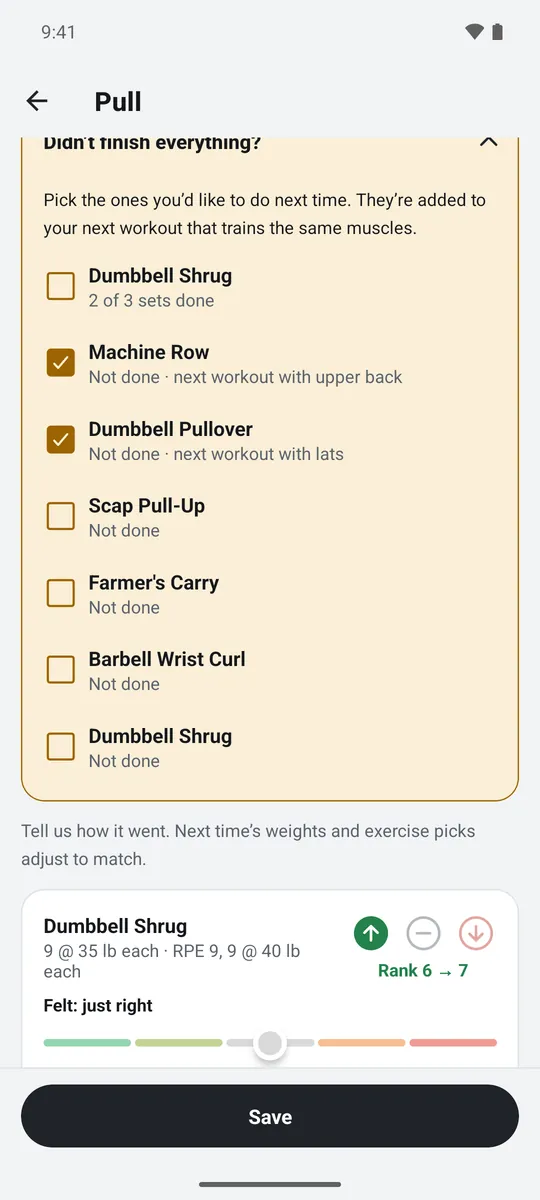
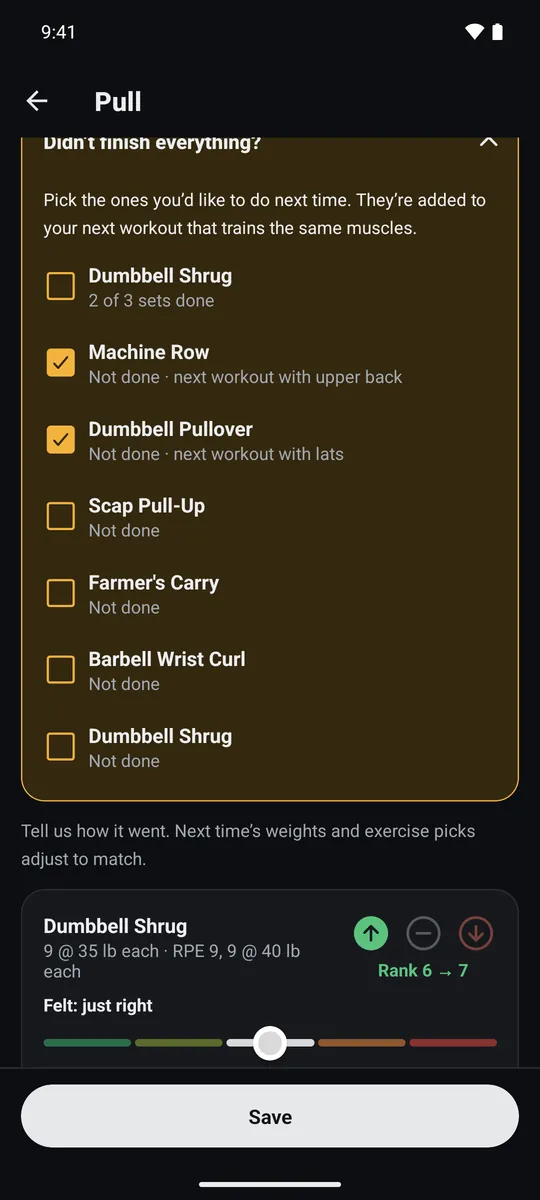
Didn’t finish everything? Tick the exercises you’d like to do next time, and they’re added to your next workout that trains the same muscles.
See the simulations: how it adapts to made-up users over 30 workouts →